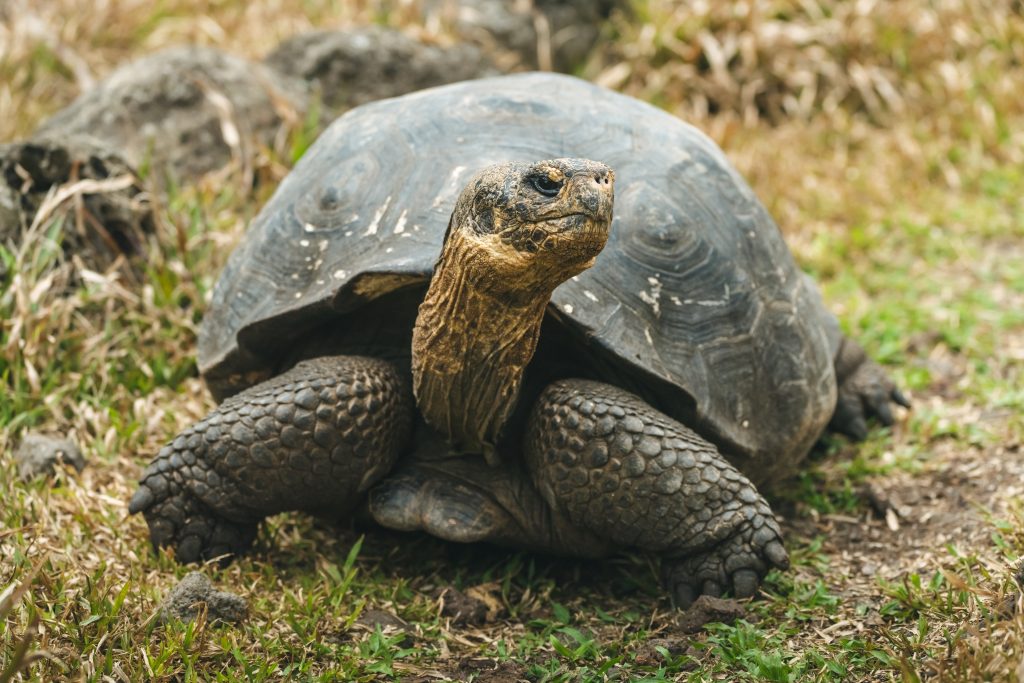
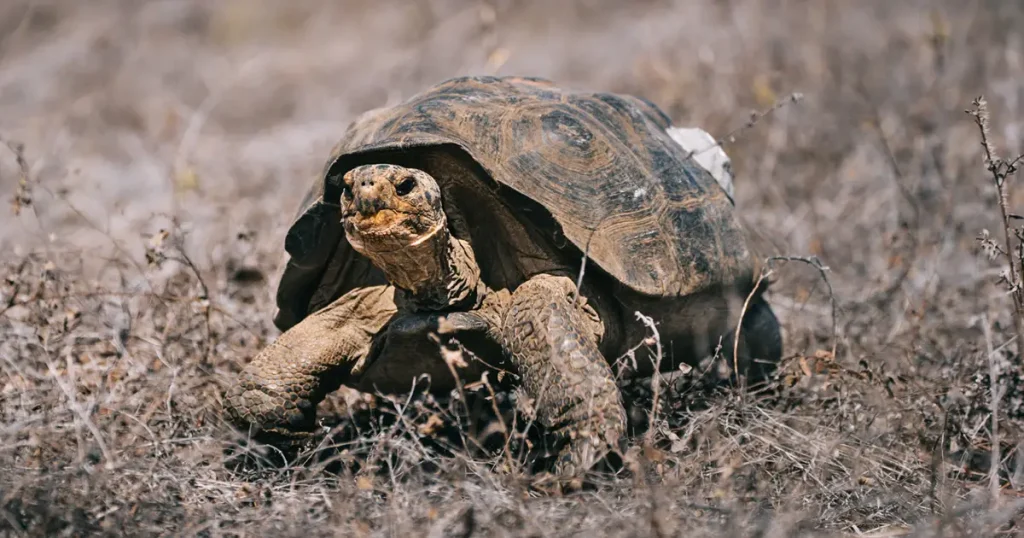
When Lonesome George died in 2012, an entire lineage died with him. George was the last known Pinta giant tortoise (Chelonoidis abingdonii), and over the years various attempts were made to breed him in hopes of producing hybrid C. abingdonii offspring who might eventually return to the island of Pinta.
Instead, the Pinta giant tortoise went completely extinct.
But Pinta’s need for the “gardeners of Galápagos” never changed. Without its endemic tortoise to trample vegetation, disperse seeds, and create microhabitats for other species, the island’s ecosystem has suffered. Woody plant populations increased by 116% from 2011 to 2022 alone, choking out other plants and wildlife.
In a new study, Galápagos Conservancy researchers examined the feasibility of introducing a different breed of giant tortoise to Pinta, and how that could affect ongoing tortoise restoration efforts elsewhere.
Earlier this year, descendants of the Floreana tortoise (Chelonoidis niger) lineage were released on Floreana Island — marking the first time C. niger descendants set foot on the island in more than 180 years. Because the Pinta giant tortoise is extinct, the study evaluated if the same hybrid tortoises released to Floreana could also be used as “ecological replacements” for the ecosystem engineer now lost to Pinta.
The results showed that reestablishing a moderate density of tortoises on Pinta could reverse the ecological shifts researchers are seeing without significantly compromising other restoration projects. The study also found that waiting too long could allow those changes to become irreversible.
Because there are a finite number of these tortoises, the study also examined whether sending a portion of them to Pinta would significantly delay restoration efforts on Floreana. Researchers found that allocating 25-30 Floreana hybrid tortoises to Pinta each year could eventually establish a sufficient population there. Doing so would add only an estimated $600,000 to the cost of the Floreana Island Restoration Project and extend its 60-year restoration plan by about 12 years.
The findings highlight an important calculus in conservation and the allocation of finite conservation resources. And it asks, are these costs tractable when the benefit is restoring ecosystems on two islands?
“It’s a delicate balancing act, especially as you’re trying to restore two imperiled ecosystems simultaneously,” said Max Jones, conservation scientist at Galápagos Conservancy and lead author of the paper. “But focusing exclusively on one may mean losing the other.”
The study offers a broader lesson for conservation efforts that rely on reintroducing species to restore damaged ecosystems. It shows that conservation decisions must account not only for the benefits and costs of acting, but also for the ecological costs of waiting as ecosystems continue to change.