Since the pink iguana (Conolophus marthae) was described as a new species in 2009, its hatchlings were completely unknown to science. No hatchlings had ever been documented in the wild until their first discovery in 2022, and until recently, scientists hadn’t formally described what a young pink iguana even looked like!
But recent events have dramatically changed what we know about these elusive newborns.
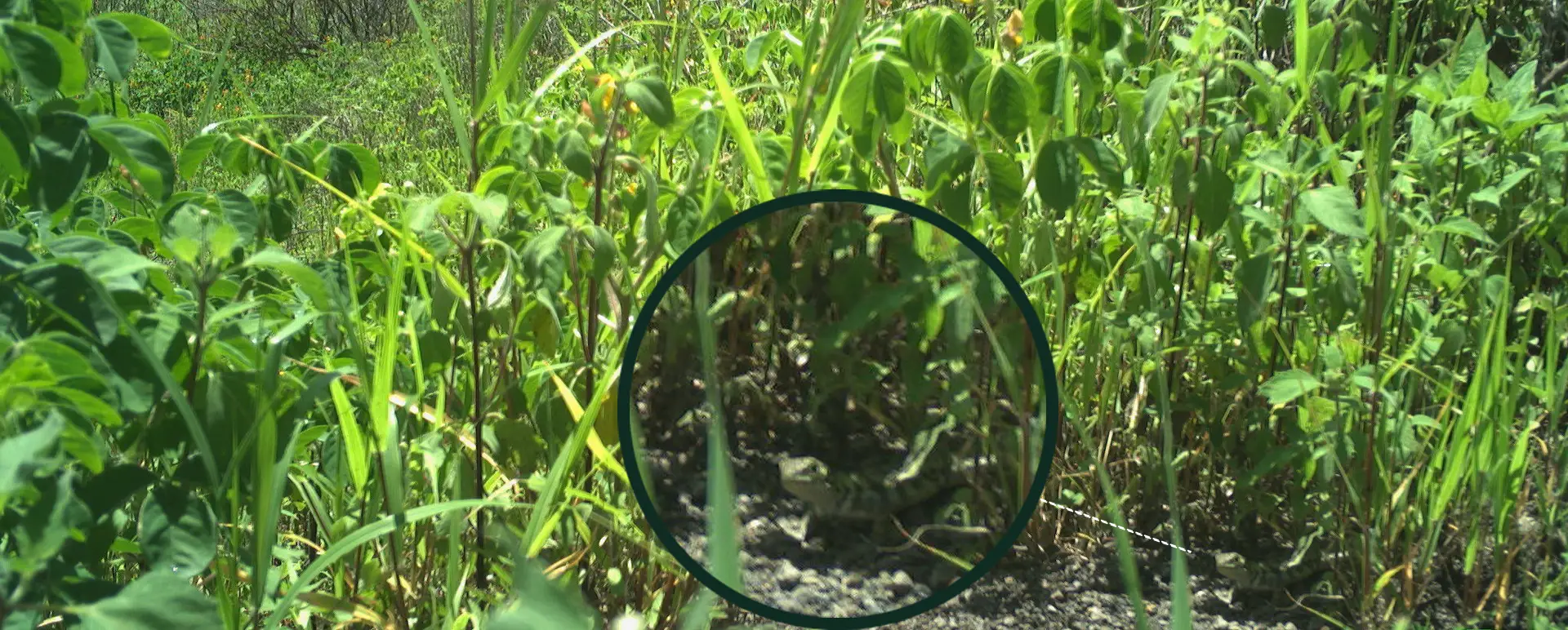
In recent years, our conservation teams have expanded scientific monitoring near known nesting areas. As a result, conservation biologists are now witnessing something remarkably hopeful: pink iguana hatchlings are being observed far more frequently, both during field surveys and in images captured by remote camera traps.
For a species with around 300 adults estimated to remain in the wild, these observations matter a great deal. They suggest that reproduction is occurring—and that young iguanas are surviving long enough to be seen.
This increase in observations has now led to an important milestone: a new scientific study, published in the journal PeerJ, that formally documents and describes Galápagos pink iguana hatchlings for the first time. The paper is authored by Galápagos Conservancy’s Director of Conservation, Dr. Jorge Carrión, together with other Galápagos Conservancy scientists and colleagues from partner institutions.
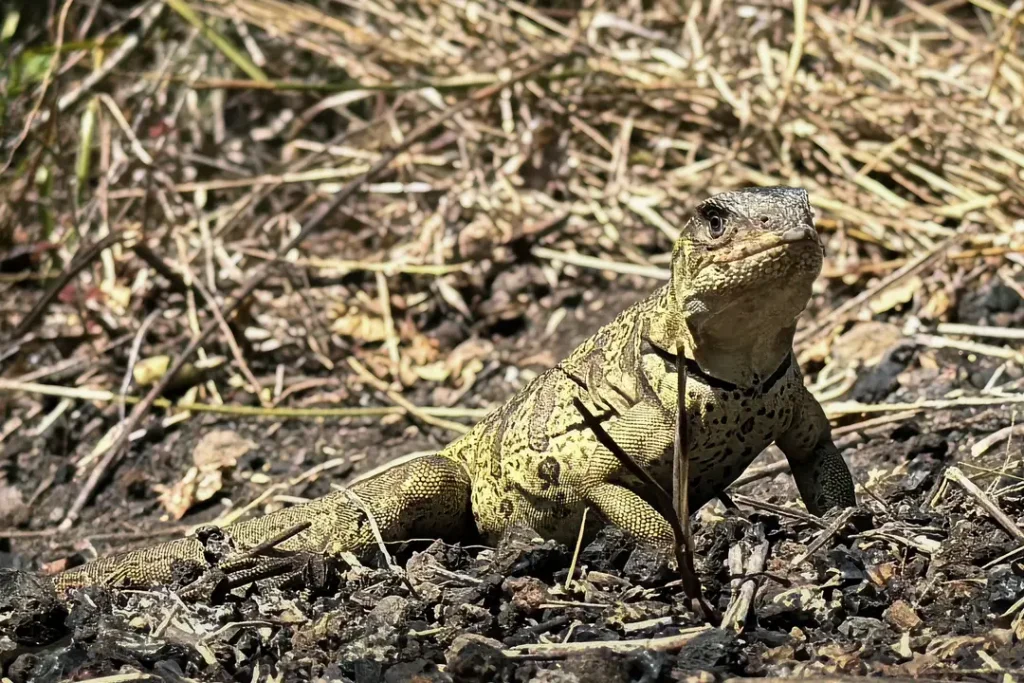
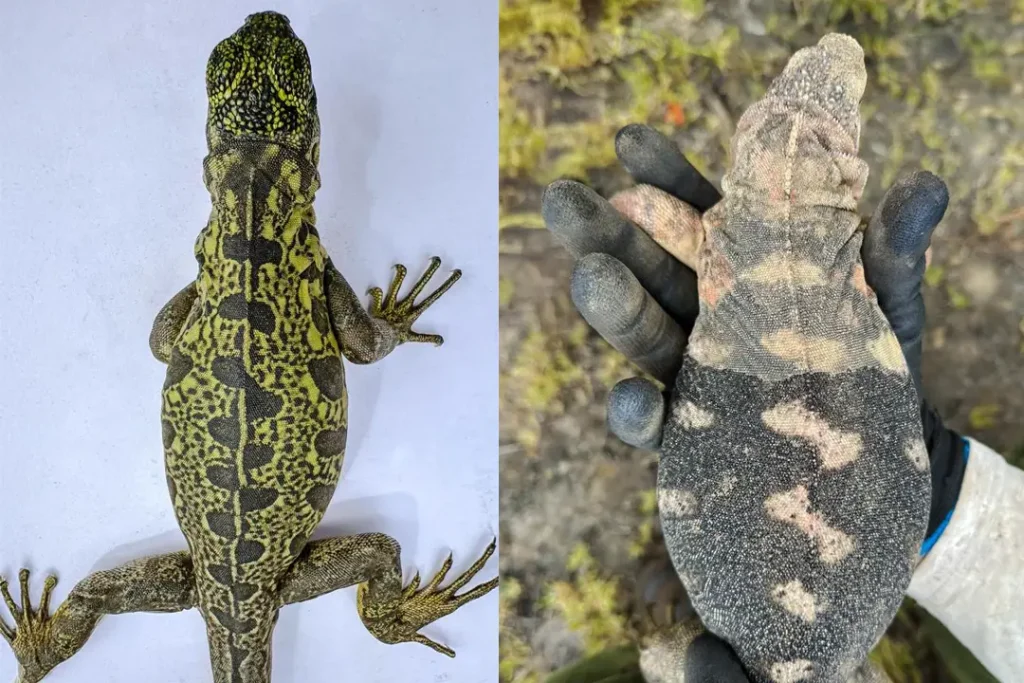
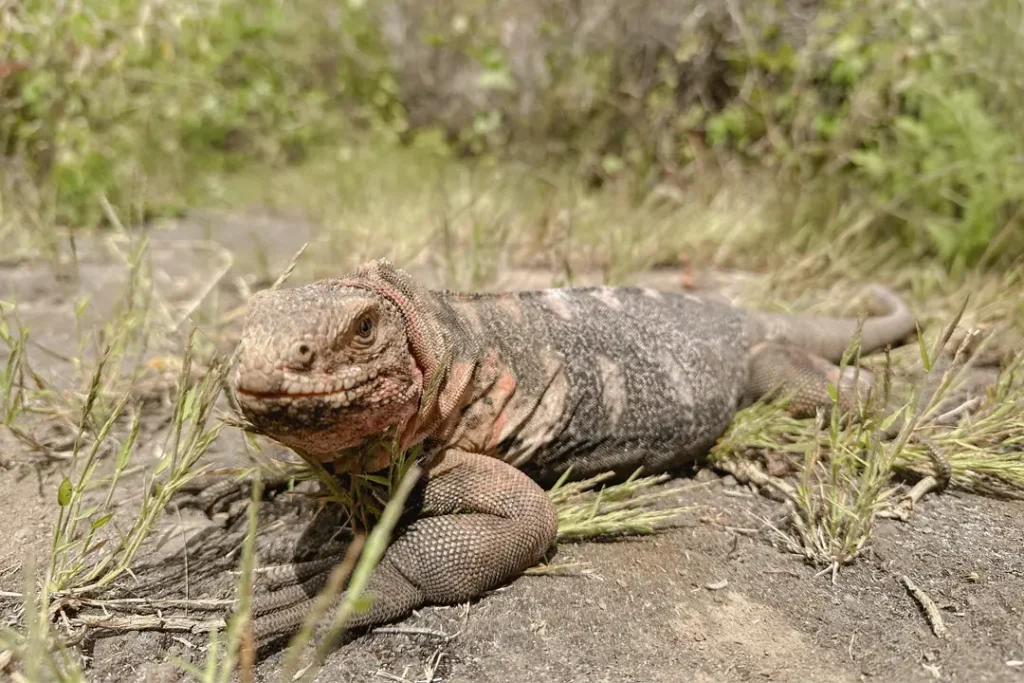
Using data collected during monitoring expeditions, the researchers were able to describe hatchlings’ size, coloration, body proportions, and behavior, and compare them with hatchlings of the closely related Galápagos land iguana (Conolophus subcristatus), the only other iguana species found at Wolf Volcano. What they found was striking.
Pink iguana hatchlings are immediately recognizable. They emerge with bright green backs marked by irregular black patterns and have noticeably longer tails, relative to their body size, than other species of land iguanas. As they grow, that green coloration fades to black, and those dark markings give rise to the pink patches that define the species as adults— revealing a striking, never-before-documented color shift as juveniles mature.
The study also notes that pink iguana hatchlings behave differently. They are exceptionally quick and evasive, often fleeing immediately when approached. This heightened wariness may reflect a response to the intense threats young iguanas face from introduced predators, such as feral cats.
While the research answers longstanding questions, its importance goes beyond the joy of discovery. Being able to recognize hatchlings in the field is essential for tracking whether young iguanas are surviving and joining the adult population, one of the biggest unanswered questions facing this Critically Endangered species.
By documenting a life stage that had rarely been seen and never formally described, this work strengthens the conservation efforts already underway. It also offers something rare in conservation biology: tangible evidence that careful, long-term monitoring is beginning to reveal hopeful signs of recovery for a species once thought almost impossible to study.