Area: 18 km2 or 7 mi2
Maximum Altitude: 458 m or 1502 ft
Human population: 0
HISTORY
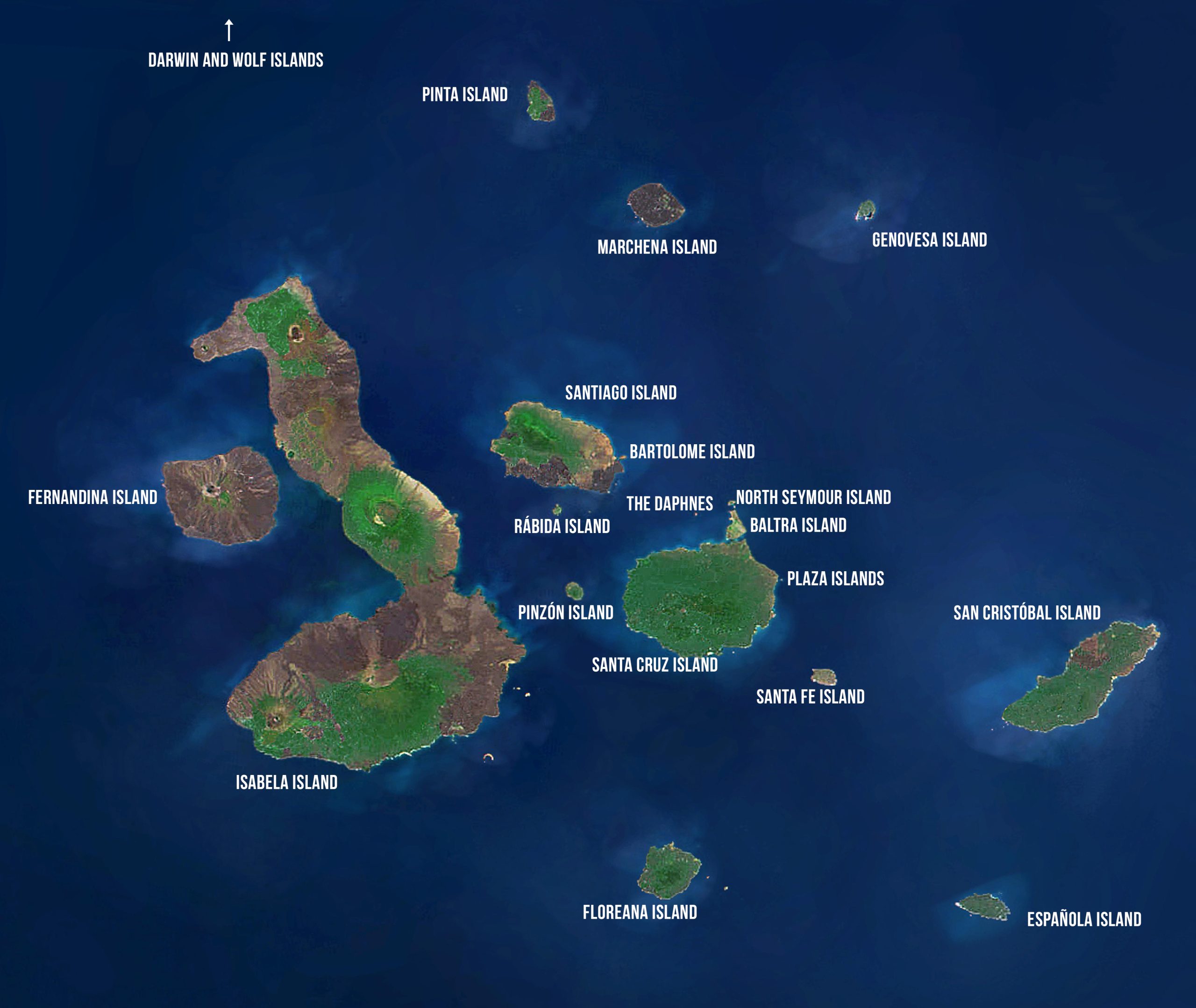
Pinzón Island, named for the brothers Pinzón, captains of the Pinta and the Niña on Columbus’ voyage to the New World, sits at the center of the archipelago. Surrounded by deep waters, Pinzón has remained isolated from all other islands for eons. The island is dominated by rocks, low spiny vegetation, and sparse tree growth. With a summit higher than most of the other arid Galápagos Islands, Pinzón experiences garúa, the heavy mist that occurs on the higher islands during the dry season. Because of this, many epiphytes (plants that grow on other plants, upon which they depend on for mechanical support but not for nutrients), including ferns and bromeliads, are found on Pinzón — even on Opuntia cactus.
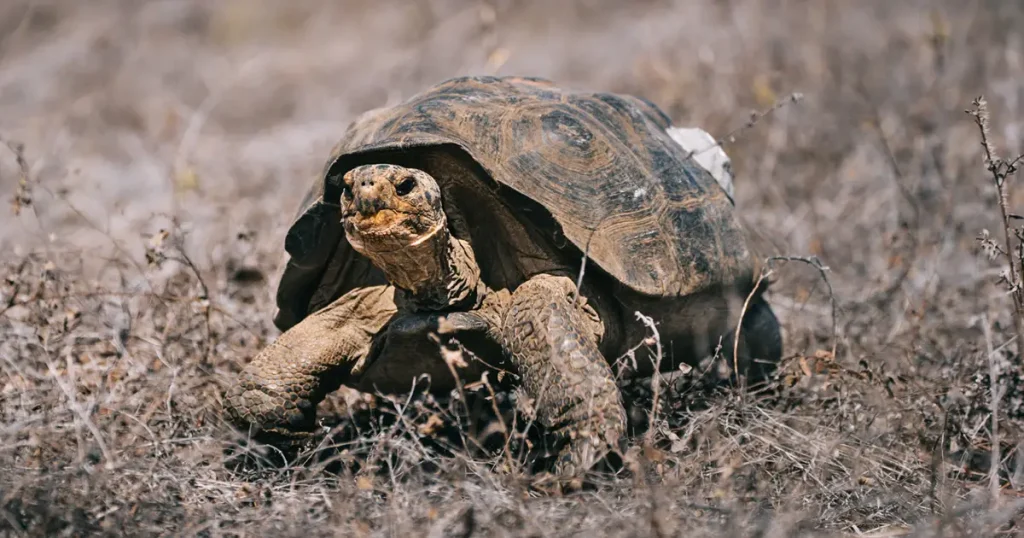
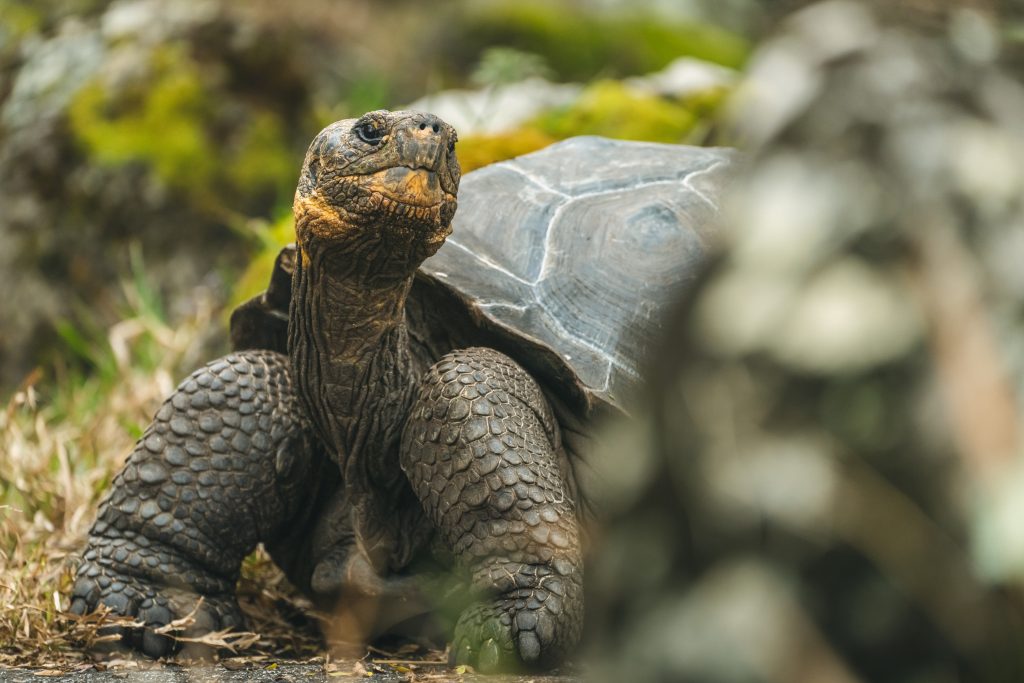
Common animals on Pinzón include Darwin’s finches, Galápagos doves, vermilion flycatchers, Galápagos snakes, and its own species of lava lizard and giant tortoise. The little fire ant is the only introduced species found throughout much of the island. Black rats plagued the island for over 100 years, essentially cutting off all natural recruitment into the tortoise population. Prior to the arrival of rats, the tortoises of Pinzón were nearly driven to extinction by whalers. Later scientific collecting expeditions continued the decimation of the population. The California Academy of Sciences collected some 80 tortoises off Pinzón in 1905. During World War II two airplanes out of the US Base at Baltra crashed on Pinzón and the remains of these aircraft can still be found today.
TODAY
With no land or marine visitor sites, Pinzón is one of the least visited islands. The deep waters surrounding it are fished by local fishermen. The Pinzón tortoise project, which began in 1965, continues today.
CONSERVATION HISTORY AND CHALLENGES
With the establishment of the Galápagos National Park Directorate and the Charles Darwin Research Station in 1959, a review of the tortoise populations was initiated. On Pinzón there were some 100-200 giant tortoises, all old adults. No young were found. Black rats, introduced to the island in the late 1800s, had apparently consumed all tortoise eggs and/or hatchlings for most of the 20th century. In 1965, the first eggs were brought from the natural tortoise nests on Pinzón and the tortoise rearing program was begun. Since the first 20 tortoises were repatriated to Pinzón in 1970, over 800 young tortoises have been released there.
The first attempt to eradicate the black rats was carried out in 1988-89; after several months of not finding any rats, they eventually began to reappear indicating that the campaign was a failure. With new methodologies (mainly the systematic release of poisoned bait from a helicopter), a successful rat eradication campaign was carried out by the GNPD and its collaborators in December 2012. In December 2014, a tortoise survey on Pinzón indicated continued growth and survival of the repatriates, the ongoing presence of many of the original native tortoises, and, for the first time in over 100 years, substantial numbers of native-born hatchlings — indicating successful in situ reproduction.
Data from a recent monitoring trip investigating the relative abundance of landbirds, seabirds, other reptiles and invertebrates are now being processed. A first look at the endemic land snail survey data indicates that native snails are generally more abundant and widely distributed across the island since the rat eradication.
Marine Site: No Name Rock
To the south of Pinzón is No Name Rock, where visitors can scuba dive around the circumference of the islet. Hammerhead and Galápagos sharks can be seen here, and sometimes other pelagic species, including rays and sea turtles.
Conservation Site: Iniciativa Galápagos
Although black rats are now absent on Pinzón, thus allowing giant tortoises to successfully reproduce in situ, the Pinzón tortoise population will continue to be included in the rearing and repatriation program in order to rebuild the population more quickly. Although hatchling tortoises are successfully leaving the nests on Pinzón, their survival in the first years of life in the wild is relatively low, while those of tortoises reared in captivity to approximately four years old have a better long-term survival rate. It is expected that egg/hatchling collection trips will occur approximately every 4-5 years, allowing natural reproduction to occur in the intermediate years.